Plastic CNC Machining Services in China
CNCFIRST machines custom plastic parts in China from more than 10 engineering plastics, including POM (Delrin), nylon, PEEK, PTFE, ABS, acrylic, polycarbonate, HDPE and polypropylene. With over 10 years of experience, an ISO 9001 and IATF 16949 certified quality system and free first article inspection, we turn your drawings into accurate prototypes and production parts. Standard tolerance for plastic parts is ±0.05 mm.
Plastics We Machine and How to Choose
| Material | Key strengths | Max service temp (approx.) | Typical parts |
|---|---|---|---|
| POM (Delrin) | Stiff, low friction, very stable | 90–100 °C | Gears, bushings, precision mechanical parts |
| Nylon (PA6/PA66) | Tough, wear resistant, absorbs moisture | 80–120 °C | Wear pads, rollers, large gears |
| PEEK | High strength at high temperature, chemical resistant | 250 °C | Aerospace, medical, semiconductor parts |
| PTFE (Teflon) | Chemically inert, lowest friction, soft | 260 °C | Seals, valve seats, insulators |
| ABS | Low cost, easy to paint and bond | about 80 °C | Housings, prototypes, enclosures |
| Acrylic (PMMA) | Best optical clarity, polishable, brittle | about 80 °C | Lenses, light guides, displays |
| Polycarbonate (PC) | Clear and extremely impact resistant | 115–120 °C | Guards, covers, windows |
| HDPE / UHMW-PE | Wear and impact resistant, food safe, low cost | about 80 °C | Wear strips, guides, cutting boards |
| Polypropylene (PP) | Excellent chemical resistance, light | about 100 °C | Tanks, fittings, lab parts |
Comparing two common options? Read our Delrin vs nylon guide.
POM (Delrin)
Stiff, strong and dimensionally stable with low friction; the easiest engineering plastic to machine accurately. See POM CNC machining.
Nylon
Tough and wear resistant, good for impact-loaded parts, but absorbs moisture and swells. See nylon CNC machining.
Acrylic
Glass-like clarity and polishable edges, but brittle; needs careful machining to avoid chipping. See acrylic CNC machining.
Polyethylene
HDPE and UHMW-PE are low-friction, chemically resistant and wear resistant, but soft with high thermal expansion. See polyethylene CNC machining.
Polypropylene
Light and highly chemical resistant, used up to about 100 °C for tanks and fittings. See polypropylene CNC machining.
ABS
Low-cost, tough and easy to paint and bond; common for housings and prototypes. See ABS CNC machining.
PTFE
Chemically inert and very low friction, usable up to 260 °C, but soft and prone to creep. See PTFE CNC machining.
PEEK
High-performance plastic with high strength up to about 250 °C, excellent chemical resistance and medical grades. See PEEK CNC machining.
Polycarbonate
Clear and extremely impact resistant, but sensitive to solvents. See polycarbonate CNC machining.
Plastic Machining Capabilities
| Item | Capability |
|---|---|
| Processes | 3-axis and multi-axis CNC milling, CNC turning, drilling, tapping |
| Standard tolerance | ±0.05 mm; tighter on small features of stable plastics such as POM and PEEK |
| Quantities | Prototypes, small batches and production |
| Quality | ISO 9001 and IATF 16949, FAI at no extra charge, CMM, inspection reports on request |
Plastics are softer than metals, expand more with heat and can distort when clamped, so we use sharp tools, controlled heat, gentle fixturing and stress relieving where needed, and we measure parts at room temperature.

We mill plastic housings, plates, manifolds, fixtures and complex 3D parts on our CNC milling machines, from small precision parts to larger sheet parts.
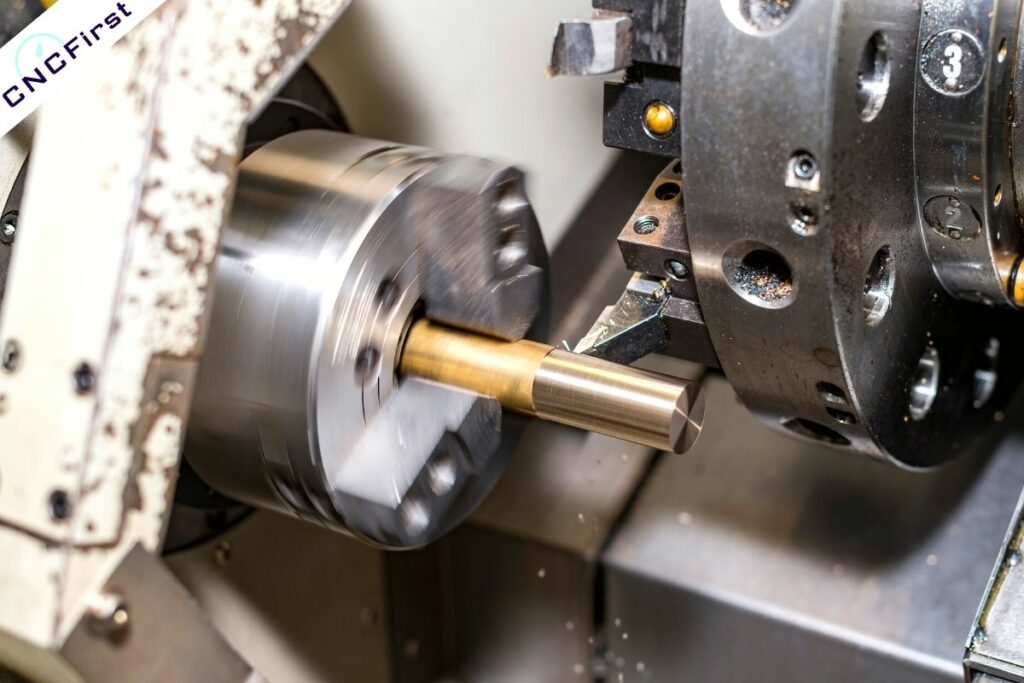
Round plastic parts such as bushings, rollers, spacers, seals and threaded connectors are made on our CNC turning centers.

CNC machining is best for prototypes, low to medium volumes and parts that need tight tolerances or thick sections. When volumes reach thousands of identical parts, injection molding usually lowers the cost per part. We can machine prototypes first and then move to molding.

Surface Finishing for Plastic Parts
Plastics cannot be anodized or powder coated like metals. Common finishes for machined plastic parts are:
- As-machined: visible tool marks, the most economical option
- Bead blasting: uniform matte texture
- Polishing: clear, glossy surfaces on acrylic and polycarbonate
- Painting: for ABS and similar plastics
- Silk screen printing and laser marking: logos and labels
Why Choose CNCFIRST for Plastic Parts
Engineering Support
Over 10 years of plastic machining experience; we help you choose the right material and tolerances.
Inspection and Certification
ISO 9001 and IATF 16949, free first article inspection, CMM and inspection reports on request.
Prototypes to Production
Machined in our own factory in China, from one-off prototypes to production batches.
Plastic CNC Machining FAQs
What are the benefits of plastic CNC machining?
No tooling cost, fast prototypes, tight tolerances, thick and complex parts, and access to high-performance plastics like PEEK and PTFE that are difficult to mold.
Which plastic is best for CNC machining?
POM (Delrin) is the easiest plastic to machine accurately and the default choice for precision mechanical parts. Choose PEEK for high temperature, PTFE for chemicals and low friction, acrylic or polycarbonate for clear parts, and ABS for low-cost housings.
What tolerances can you hold on plastic parts?
Our standard tolerance is ±0.05 mm. Stable plastics such as POM and PEEK can be held tighter on small features; soft plastics such as PTFE, HDPE and PP need more allowance (typically ±0.1 mm on large dimensions).
CNC machining or injection molding for plastic parts?
CNC machining is usually cheaper for prototypes and up to a few hundred or a few thousand parts. Injection molding becomes cheaper for high volumes because the mold cost is spread over many parts.
Can you machine clear plastic parts?
Yes. We machine acrylic and polycarbonate and can polish windows and edges to restore clarity.
Do you provide material certificates for plastics?
Yes, material certificates are available on request, including food-grade and medical-grade materials.