
Copper CNC Machining Services in China
CNCFIRST machines custom copper parts in China for electrical, electronics, thermal management and industrial customers: busbars, terminals, connectors, heat sinks, cooling plates and EDM electrodes. We work from prototypes to production batches, with CNC milling and turning in-house.
Pure copper is soft and gummy, so it needs sharp tools and the right parameters to hold tolerances and avoid burrs. We set up copper jobs specifically for that.
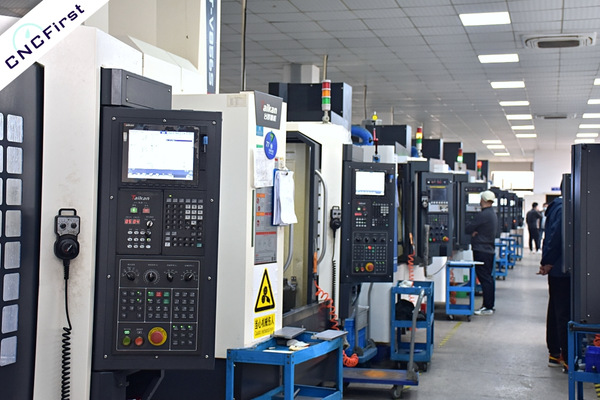
CNC Machining Capabilities For Custom Copper Parts
We mill and turn copper bar, plate and profiles. Typical copper parts include busbars and connectors that need high electrical conductivity, heat sinks and liquid cooling plates that need high thermal conductivity, and wear or spring parts in beryllium copper.
How we machine copper:
- Sharp, polished carbide tools with high positive rake, so the tool cuts rather than smears the soft metal.
- Higher cutting speeds and controlled feed, with coolant to stop chips welding to the tool.
- Light finishing passes and deburring, because pure copper forms large burrs.
- Careful handling and packing, since copper scratches and oxidizes easily.
Where the design allows, free-machining tellurium copper (C145) machines much faster than pure copper with only a small loss in conductivity. For cosmetic or high-volume turned parts, brass may be a better choice.
Typical tolerances are ±0.05 mm, and down to ±0.01 mm on critical features, depending on part size and geometry. See our CNC milling and CNC turning services.


Copper grades we machine
Choose the copper grade by the conductivity, strength and machinability your part needs. Machinability is rated against free-cutting brass C360 (100). Values are typical; see our guide to copper grades for more detail.
| Grade (UNS) | Common name | Electrical conductivity (% IACS) | Machinability (C360 = 100) | Typical use |
|---|---|---|---|---|
| C10100 | Oxygen-free electronic (OFE) | 101 | 20 | Vacuum and high-reliability electronic parts |
| C11000 | Electrolytic tough pitch (ETP) | 100 | 20 | Busbars, terminals, general electrical parts |
| C14500 | Tellurium copper | 93 | 85 | Machined connectors, contacts, welding tips |
| C18200 | Chromium copper | 80 (aged) | 20 | Welding electrodes, parts needing strength and conductivity |
| C17200 | Beryllium copper | 22 (aged) | 20 | Springs, contacts, non-sparking tools |
| C17300 | Free-machining beryllium copper | 22 (aged) | 50 | Machined BeCu parts in larger volumes |
European equivalents: C11000 is close to Cu-ETP (CW004A, DIN 2.0060); C10200 to Cu-OF (CW008A). See Cu-ETP / 2.0060 material data.
C101 / C102 oxygen-free copper
Oxygen-free copper (C10100 OFE and C10200 OF) has at least 99.95% copper and almost no oxygen, so it can be brazed or used in hydrogen and vacuum without embrittlement. It has the highest conductivity of standard grades. Like all pure copper, it is soft and gummy to machine.
C110 ETP copper
C11000 electrolytic tough pitch (ETP) copper is the most common and economical copper grade, with about 100% IACS conductivity. It contains a small amount of oxygen, so it is not recommended for hydrogen brazing. It is the standard choice for busbars and electrical parts.
C172 beryllium copper
C17200 contains about 1.8–2.0% beryllium. After age hardening it is one of the strongest copper alloys, with excellent fatigue and spring properties and moderate conductivity. It is used for springs, contacts, bearings and non-sparking tools. Machining BeCu produces dust that is hazardous if inhaled, so it must be machined wet with proper extraction.
C173 free-machining beryllium copper
C17300 has the same beryllium content as C17200 with a small lead addition that makes it much easier to machine. It is used for turned BeCu parts where volume makes cycle time important.
C145 tellurium copper
C14500 adds about 0.5% tellurium to copper. It keeps around 90% IACS conductivity but machines about four times faster than pure copper, with smaller chips and better surface finish. It is a good choice for machined electrical connectors and contacts.
C182 chromium copper
C18200 contains about 0.6–1.2% chromium. After heat treatment it is much stronger and harder than pure copper while keeping about 80% IACS conductivity, and it holds its strength at elevated temperature. It is widely used for resistance welding electrodes and parts that carry current under load.
Why choose our CNC copper machining services in China?
Milling and turning
CNC milling, turning and 5-axis machining in one shop for copper busbars, connectors, heat sinks and electrodes.
Tolerances
Typical tolerances of ±0.05 mm, down to ±0.01 mm on critical features, depending on part size and geometry.
Surface finishing
Finishes for copper parts include polishing, brushing and plating for conductivity and protection against tarnish.
Quality control
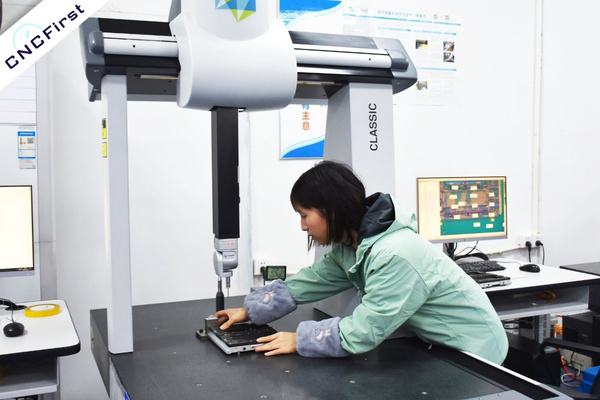
ISO 9001 certified quality system, first article inspection and CMM measurement of critical dimensions.
Control The Quality Of copper parts
We check incoming copper bar and plate against the grade you specify before machining. New parts get a first article inspection, and critical dimensions are measured on a CMM. Because copper scratches and tarnishes easily, we protect finished parts during deburring, cleaning and packing. Inspection reports are available on request.
Other materials for CNC machining
We also have a variety of other related CNC machining materials that can be used in many different applications. Our selection includes various metals and alloys such as aluminum, brass, bronze, copper, stainless steel, titanium, and tool steel.


Copper CNC Machining FAQs
Is copper easy to CNC machine?
Not as easy as it looks. Pure copper (C101, C110) is soft but very ductile and gummy, with a machinability rating of only about 20% of free-cutting brass. It tends to smear, build up on the cutting edge and form large burrs. Sharp, polished carbide tools with positive rake, the right speeds and coolant solve most of these problems. If machinability matters, tellurium copper C145 or brass are much easier to cut.
What are CNC machined copper parts used for?
Most machined copper parts use its electrical or thermal conductivity: busbars, terminals, connectors and contacts in power and electronics equipment; heat sinks, cold plates and heat spreaders for thermal management; welding electrodes and tips; and EDM electrodes. Beryllium copper is used for springs, contacts and non-sparking tools.
Can copper parts be anodized?
No. Anodizing works on aluminum and titanium, not copper. Copper parts are usually left bare, polished or plated with tin, nickel or silver to improve solderability, contact performance or protection against tarnish.
Copper vs brass: which should I use?
Use copper when the part must conduct electricity or heat as well as possible. Use brass when conductivity is less important and you want lower cost, faster machining and a good cosmetic finish. Free-cutting brass C360 machines about five times faster than pure copper. See our brass CNC machining page.
Looking for a manufacturer of custom copper parts?
Send us your drawing with the copper grade, quantity and finish you need, and we will reply with a quote and any manufacturability suggestions. Also see our bronze and brass machining services, or all CNC machining services in China.